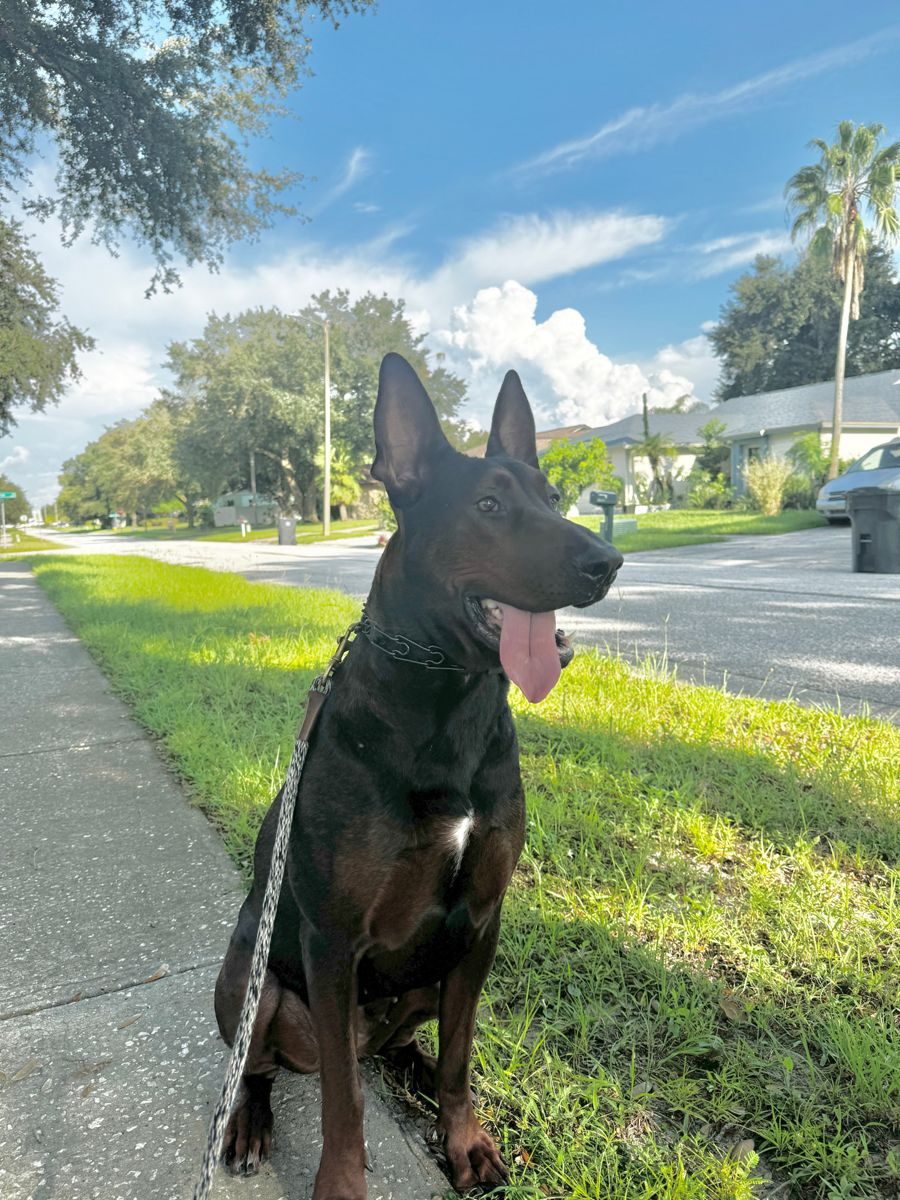
What a good behavior plan includes
- A conversation about your dog's history, health and triggers
- A plan that changes the situation before pushing the dog past its limits
- Practice that starts small and builds slowly
- Coaching for every person who handles the dog
- Advice to involve your veterinarian when pain or health could play a part
- Clear honesty about what training can and cannot change
- Whether your dog's trigger is predictable, such as a doorbell, a passing dog or being left alone
- Management steps at home, like gates, leashes and distance, that keep everyone safe while training progresses
Where this is available. Across Tampa Bay to Parrish.
Compare other programs. Find your fit.
Why owners choose this
One trainer. Your dog. A plan that fits.
We do not refer owners to franchise training chains. In our view, they lean on less experienced staff and indoor facilities instead of real-world training.
Good questions
Before we begin.
Can behavior problems be fixed?
Many can improve a lot with consistent work, but no honest trainer guarantees results. Progress depends on your dog, your household and how steadily the plan is followed.
Should I see my vet first?
Often yes. Pain, illness and some medications can affect behavior, so a vet check is a smart first step for sudden changes.
Is behavior training the same as obedience?
Not quite. Obedience teaches skills on cue, while behavior training works on the emotions and habits behind problems like fear, reactivity and anxiety.
What does behavior training typically cost?
Behavior training is custom priced, because every dog and problem is different. Request a free estimate to get a price for your dog. 0% financing is available, subject to approval.
What happens in the first dog behavior session?
The trainer listens to your dog's history, looks at when and where the problem happens and observes your dog. They explain a plan, safety steps and what to practice. Expect questions about health, and a recommendation to involve your vet when it makes sense.
How do I know if my dog needs a behavior trainer instead of an obedience trainer?
If the problem involves fear, aggression, reactivity, panic when alone or intense barking, behavior help is usually the better fit. Obedience works on cued skills, while behavior work addresses the emotion behind the problem.
Is it safe to train an aggressive or reactive dog in Tampa?
It can be, with a careful plan, but safety comes first. Use distance, secure leashes and gates, and avoid crowded places at the start. Tell the trainer about any bites or close calls before the visit.
What should I do between behavior lessons?
Follow the plan exactly and avoid putting your dog in situations it cannot handle. Practice small steps, manage triggers with distance or barriers, and keep notes on what happened. Call your trainer if things worsen, rather than pushing ahead.